Standard fire suppression systems do a great job protecting most buildings. But some spaces and some risks need something more. When your facility handles flammable liquids, sensitive electronics, or irreplaceable equipment, a conventional sprinkler system may not be the right answer. In some cases, it could make things worse.
That’s where special hazard fire suppression comes in.
At Everguard Fire Safety, we’ve installed thousands of special hazard systems across Canada. We know every facility is different and we work with you to find the right solution for your specific risk.
What Makes a Hazard “Special”?
Not every fire can be fought the same way. Special hazard environments are spaces where standard water-based sprinklers would be ineffective, damaging, or outright dangerous. If your facility has any of the following, it’s worth having a conversation with our team:
- Sensitive electronics or equipment: Water damages servers, control panels, and precision machinery even before the fire does.
- Flammable liquids or gases: Water can spread liquid fuel fires rather than suppress them.
- Energized electrical systems: Water conducts electricity, creating a second hazard on top of the first.
- Irreplaceable assets: Documents, artworks, or specialized equipment that simply can’t be replaced.
Special hazard suppression is designed around your risk using the right agent, the right delivery method, and the right design for your space.
The Systems We Provide
Clean Agent Suppression
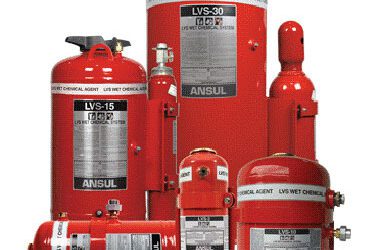
Clean agent systems are ideal for spaces where equipment and data must be protected; server rooms, battery storage, control rooms, and power generation facilities. These systems discharge a gas that suppresses fire quickly, without leaving residue and without damaging the equipment around it.
We offer a range of clean agent options, including eco-friendly solutions free of forever chemicals. Our design and sales teams will walk you through the options and help you choose a system that meets your safety requirements and your environmental goals.
Common applications: Computer rooms, battery storage, engine compartments, telecommunications facilities, power generation.
Industrial Dry Chemical
Industrial dry chemical systems are built for tough environments. They suppress fires fast across small or large areas, protecting equipment, reducing production downtime, and most importantly protecting the people working near the hazard.
These systems work for total flooding or local applications, and are well-suited for Class B fire risks.
Common applications: Spray booths, CNC machines, generators, hazardous storage areas.
Kitchen and Galley Wet Chemical
Commercial kitchens are one of the highest-risk environments in any facility. Cooking oils reach extreme temperatures, and a standard dry chemical system isn’t enough to handle a grease fire properly.
Wet chemical systems use a specialized agent that cools the fire and forms a protective barrier over the cooking surface, preventing re-ignition. They protect appliances, exhaust hoods, property, and the people working in your kitchen. This applies to commercial kitchens onshore and marine galleys at sea. Everguard services both.
Common applications: Restaurant kitchens, industrial food production, marine galleys.
Every Industry Has Unique Needs
Special hazard fire protection isn’t one-size-fits-all. We provide custom solutions across a wide range of industries, including:
- Mining: Vehicle suppression systems for haul trucks, loaders, and drills. Underground fire protection for enclosed, remote environments.
- Oil and gas: Explosion suppression and prevention for refineries, drilling rigs, and processing facilities.
- Forestry and manufacturing: Fire protection for high-heat, high-dust environments where standard systems fall short.
- Marine: Fixed suppression systems for engine rooms and galleys meeting Transport Canada and IMO requirements.
- Commercial and industrial: Customized protection for any space with elevated fire risk.
If your operation doesn’t fit a standard category, contact us. Our team is ready to assess your risk and build a solution around it.
What to Expect from Everguard
We consult, design, install, maintain, and service everything we sell. Our technicians are manufacturer-trained and nationally certified. We provide detailed digital inspection reports, managed service schedules, and 24/7 support so your systems stay compliant and your team stays protected.
All special hazard suppression systems require semi-annual and annual inspections under ULC 1254, NFPA 17 and 17A, and the National Fire and Building Codes. We manage that schedule for you so you’re always audit-ready and never caught off guard.
Everguard has been serving Canadian industries since 1922. We’ve built our reputation on integrity, honesty, and doing the job right.
Ready to protect your facility?
Contact Everguard Fire and Safety today for a consultation or quote.
Frequently Asked Questions
What are special hazard fire suppression systems?
Special hazard systems are designed to protect high-risk areas, sensitive equipment, and environments where standard sprinklers would be inadequate or damaging. Everguard provides clean agent, industrial dry chemical, and wet chemical solutions for spaces including server rooms, battery storage, engine compartments, industrial machinery, and commercial kitchens.
How often do these systems need to be inspected?
All special hazard suppression systems require semi-annual and annual inspections and maintenance to stay compliant with ULC and NFPA standards. Everguard manages your inspection schedule and provides full documentation.
Can Everguard design a custom system for my facility?
Yes. We offer consultation, design, supply, installation, and ongoing service for every type of special hazard system. Every solution is built around your specific space, hazards, and regulatory requirements.
What agent is right for my application?
That depends on your risk. Clean agents are ideal for electronics and sensitive equipment. Dry chemical systems are suited to industrial hazards and flammable liquids. Wet chemical systems are required for commercial kitchen and grease fire protection. Our team will assess your facility and recommend the right solution.