Fire safety relies on knowing what type of fire you’re facing and selecting the right extinguisher to fight it. Choosing incorrectly can be ineffective at best and dangerous at worst.
Canada’s fire codes, training guidelines, and safety materials all emphasize the importance of proper fire classification and extinguisher selection for homes, workplaces, and industrial sites.
What Are the Fire Classes in Canada?
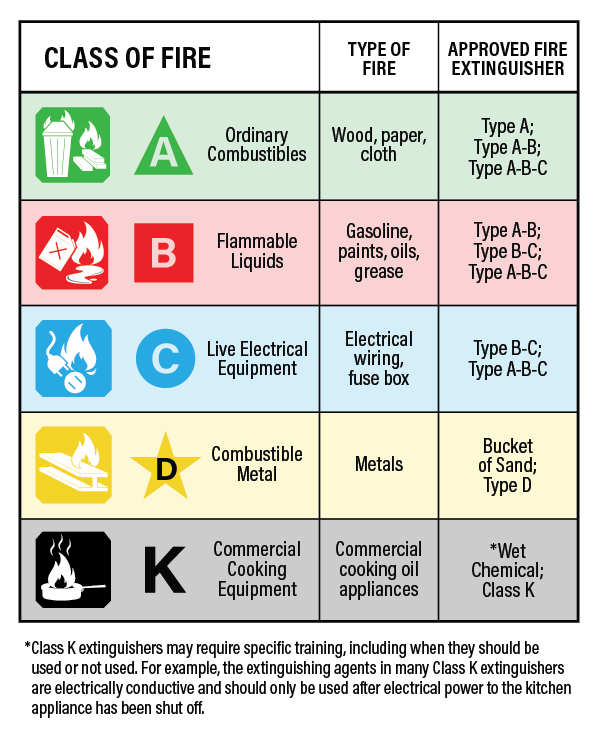
Fires are grouped into “classes” based on the type of fuel involved. Each class requires specific extinguishing methods:
Class A – Ordinary Combustibles
What it includes:
Paper, wood, cloth, plastics, rubber – things that leave ash.
Why it matters:
These fires are common in homes, offices, and construction sites.
Best extinguishers:
Water, foam, or multipurpose dry chemical. These agents cool and smother solid fires.
Class B – Flammable Liquids & Gases
What it includes:
Gasoline, oil, solvents, paints, propane, and other liquid fuels.
Best extinguishers:
Foam, carbon dioxide (CO₂), or dry chemical extinguishers. These separate oxygen from fuel or interrupt the fire reaction.
IMPORTANT: Never use water on Class B fires. It can spread the fire.
Class C – Electrical Fires
What it includes:
Live electrical equipment, wiring, panels, motors.
Best extinguishers:
CO₂ or dry chemical – both non-conductive agents that safely suppress electrical fires.
Class D – Combustible Metals
What it includes:
Metals such as magnesium, titanium, and sodium.
Best extinguishers:
Specialized dry powder agents designed for metal fires. Regular extinguishers are ineffective and can react dangerously.
Class K – Cooking Oils & Fats
What it includes:
Grease and oil fires in kitchens – often commercial kitchen deep fryers.
Best extinguishers:
Wet chemical extinguishers create a soapy layer that cools and smothers these fires safely.
Types of Fire Extinguishers & Their Uses
Here’s how extinguisher types relate to Canadian fire classes:
- Water: Class A (ordinary combustibles)
- Foam: Class A & B (solids & liquids)
- Dry Chemical ABC: Class A, B & C (multi-purpose)
- CO₂ (Black Cylinder): Class B & C (liquids & electrical)
- Wet Chemical (Yellow): Class K (cooking oils)
Colour Coding:
In Canada, extinguishers are colour-coded by agent type to help identify them quickly. For example, red for water, cream for foam, black for CO₂, blue for powder, and yellow for wet chemical.
Canadian Standards & Regulations
Fire extinguisher selection and placement must meet Canadian fire regulations such as the National Fire Code of Canada (NFC) and referenced safety standards. These codes help ensure extinguishers are appropriate for hazard types present in buildings and meet performance criteria.
At Everguard Fire Safety, we help businesses across Canada stay protected with certified fire extinguisher inspections, code-compliant equipment, and customized fire protection solutions. If you’re unsure whether your current extinguishers are right for your risks or when they were last serviced, our team is here to help.