Fire safety compliance in Canada is a layered set of federal codes, provincial regulations, and equipment-specific requirements that apply differently depending on what systems your facility runs.
This checklist consolidates the core requirements across system types so you have one canonical reference point.
Fire Safety Compliance Checklist by System Type

Portable Fire Extinguishers
| Requirement | Frequency | Standard |
| Visual inspection | Monthly | NFPA 10 / ULC |
| Annual maintenance inspection | Every 12 months | NFPA 10 / ULC |
| Internal inspection (applicable types) | Every 6 years | NFPA 10 |
| Hydrostatic pressure testing | Every 12 years (stored pressure); every 5 years (CO₂, high-pressure) | NFPA 10 |
What to document: Date of each inspection, technician name and certification, condition of extinguisher, any deficiencies noted and remediation taken, service tags attached to the unit.
Compliance notes: Monthly visual checks can typically be performed by trained in-house staff; annual maintenance must be performed by a licensed, ULC-certified technician. Extinguishers that fail inspection must be removed from service immediately — a tagged-out extinguisher is not a compliant one.
For more details on frequency requirements and what each inspection involves, see: What You Need to Know About Fire Extinguisher Servicing.
For inspection and maintenance services: Fire Extinguisher Inspections & Maintenance.

Fire Suppression Systems
|
System type |
Inspection frequency |
Standard |
|
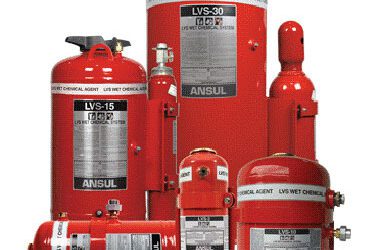
Wet chemical (commercial kitchen) |
Every 6 months |
NFPA 96 / ULC |
|
Dry chemical suppression |
Every 6 months |
NFPA 17 / ULC |
|
Clean agent systems |
Every 6 months |
NFPA 2001 / ULC |
|
Water-based sprinkler systems |
Quarterly (wet pipe); semi-annually (dry pipe, pre-action) |
NFPA 25 / ULC |
|
Special hazard suppression (mobile equipment, mining, industrial) |
Every 6 months |
Manufacturer specs / ULC |
What to document: Inspection date, system type, technician certification, agent quantity verification (weight or pressure check), nozzle and detection component condition, any deficiencies and corrective actions, recharge records where applicable.
Compliance notes: The 6-month interval applies to most suppression systems and is among the most commonly missed requirements — particularly for facilities that treat their kitchen suppression or industrial systems as “set and forget.” Semi-annual inspections are non-negotiable for insurance purposes in most provinces.
See our services: Special Hazard Suppression Systems | Fire Suppression for Mobile Equipment | Water-Based Fire Protection Systems.
Fire Alarm Systems
|
Requirement |
Frequency |
Standard |
|
Full inspection and test |
Annually |
CAN/ULC-S536 |
|
Monitoring verification |
Annually (with inspection) |
CAN/ULC-S536 |
|
Visual inspection of components |
Quarterly (high-occupancy/high-risk) |
CAN/ULC-S536 |
What to document: Inspection certificate, test results for all initiating devices (smoke detectors, heat detectors, pull stations), notification appliances, control panel, and monitoring connection. Any device that fails testing must be recorded with remediation notes.
Compliance notes: CAN/ULC-S536 is the governing standard for fire alarm inspection and testing in Canada. It requires that inspection records be kept on-site and made available to the AHJ on request. Alarm systems must be tested by technicians certified to the standard — not simply a general electrician or alarm company without fire-specific ULC certification.
See our service: Fire Alarm Systems.

Emergency Lighting and Exit Signs
|
Requirement |
Frequency |
Standard |
|
Functional test (30-second) |
Monthly |
CAN/CSA-C22.2 No. 141 |
|
Full-duration test (90-minute) |
Annually |
CAN/CSA-C22.2 No. 141 |
|
Battery replacement / unit inspection |
As required by test results |
CAN/CSA-C22.2 No. 141 |
What to document: Date of each test, duration of test, pass/fail result per unit, any units replaced or repaired, technician or staff member conducting the test.
Compliance notes: Monthly 30-second tests can typically be conducted by trained in-house personnel; the annual 90-minute discharge test is the one most facilities miss or defer. Failing units must be repaired or replaced before the facility is considered compliant — a burnt-out exit sign is a code violation, not just a maintenance item.
See our services: Emergency Lighting Inspections | Emergency Lighting.
Fire Hydrants and Water Supply
|
Requirement |
Frequency |
Standard |
|
Full flow test |
Annually |
NFPA 291 / local authority |
|
Visual inspection |
Annually |
NFPA 291 |
|
Post-winter inspection (where applicable) |
Annually (spring) |
Local authority |
What to document: Flow test results, hydrant condition, any obstructions noted, operating pressure and flow rate, corrective actions.
Compliance notes: Requirements vary significantly by municipality and AHJ. Confirm your specific obligations with your local fire department or fire marshal’s office.
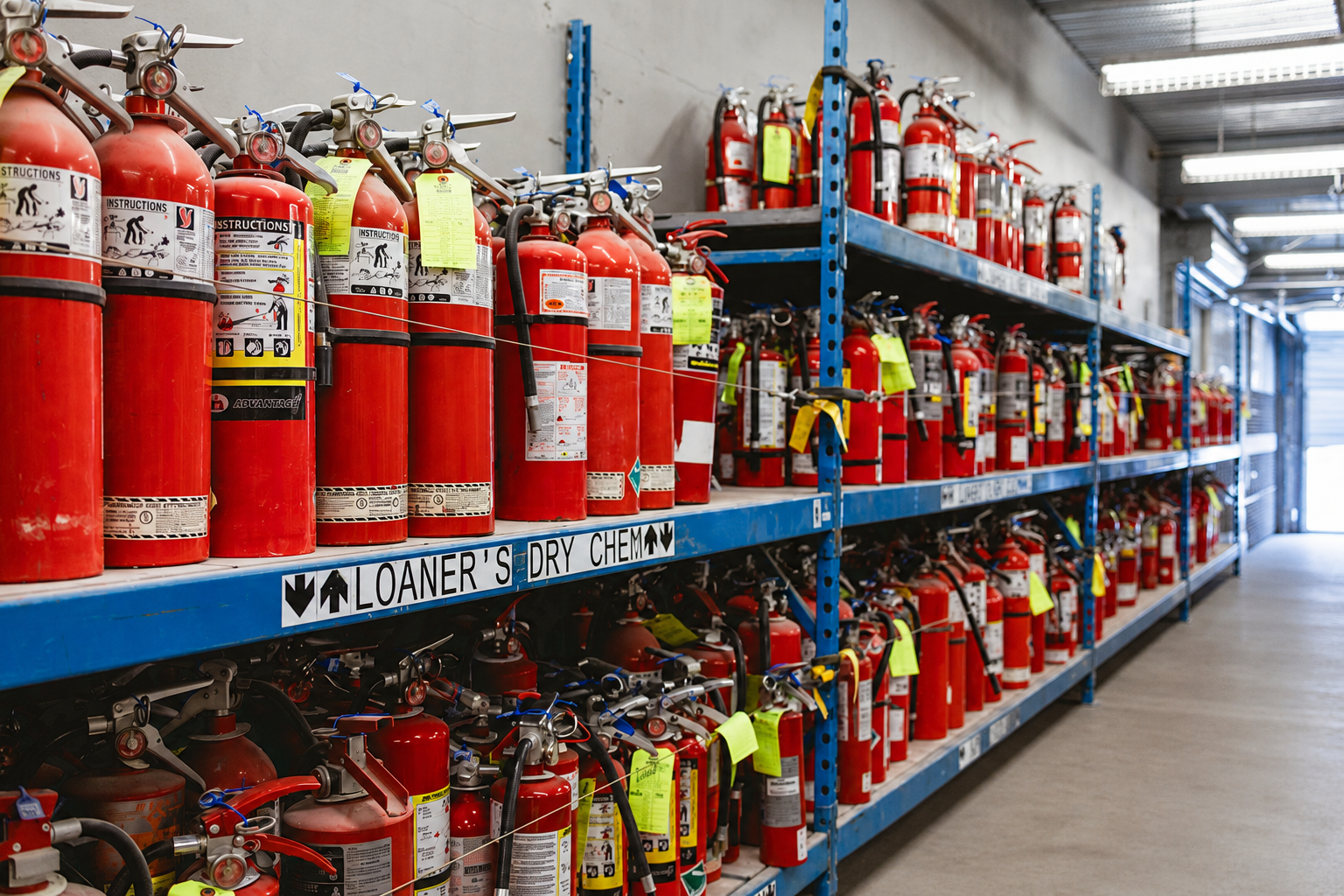
High-pressure Cylinder Re-qualifying
|
Requirement |
Frequency |
Standard |
|
Hydrostatic pressure testing |
Every 5 years (CO₂ and high-pressure cylinders) |
Transport Canada / ULC |
|
Visual external inspection |
At each service interval |
ULC |
What to document: Test date, cylinder serial number, technician certification, pass/fail result, condemnation records for any cylinders removed from service.
Compliance notes: Cylinders that fail hydrostatic testing cannot be returned to service and must be properly disposed of. Re-qualifying must be performed by a facility certified under Transport Canada regulations.
See our service: High-Pressure Re-Qualifying.
Compliance Record-keeping: What to Keep and for How Long
Having compliant systems isn’t the same as being able to demonstrate compliance. In an audit, inspection, or insurance review, documentation is what matters.
What to maintain on-site:
- Current inspection certificates for all systems
- Test reports for the most recent inspection cycle
- Service records including any deficiencies noted and remediation completed
- Records of any system modifications or component replacements
- Technician certification documentation (or confirmation from your provider)
Retention: Most provincial codes require inspection records to be kept for a minimum of 2 years, though many risk managers keep them for 5–7 years. Check your provincial fire code and your insurer’s requirements for your specific obligation.
Format: Digital records are increasingly accepted, but some AHJs still require physical tags or certificates on-site — for extinguishers and suppression systems in particular. Confirm with your AHJ what format is required for your jurisdiction.
Working with a Compliant Provider
A checklist is only as useful as the provider executing it. When selecting a fire protection company, confirm that their technicians are ULC-certified for the systems they’ll be servicing at your facility, that they carry OEM training for your specific equipment where applicable, and that they can produce inspection documentation in the format your AHJ and insurer require.